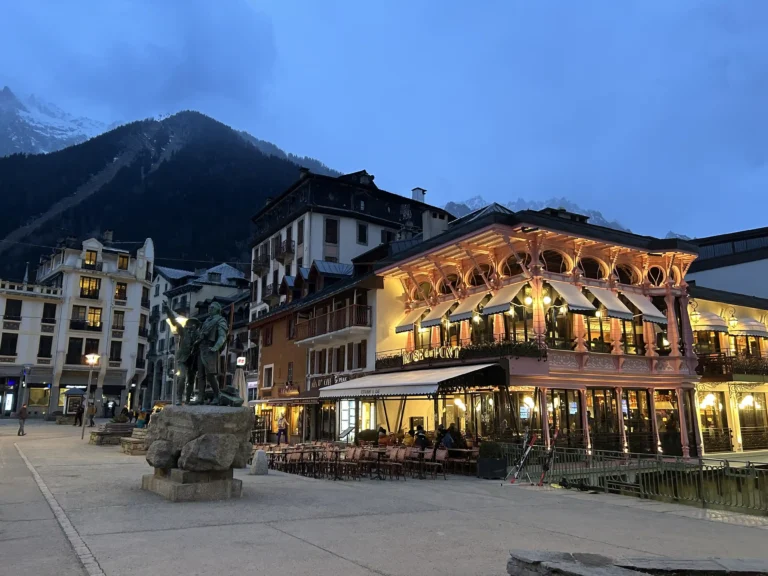
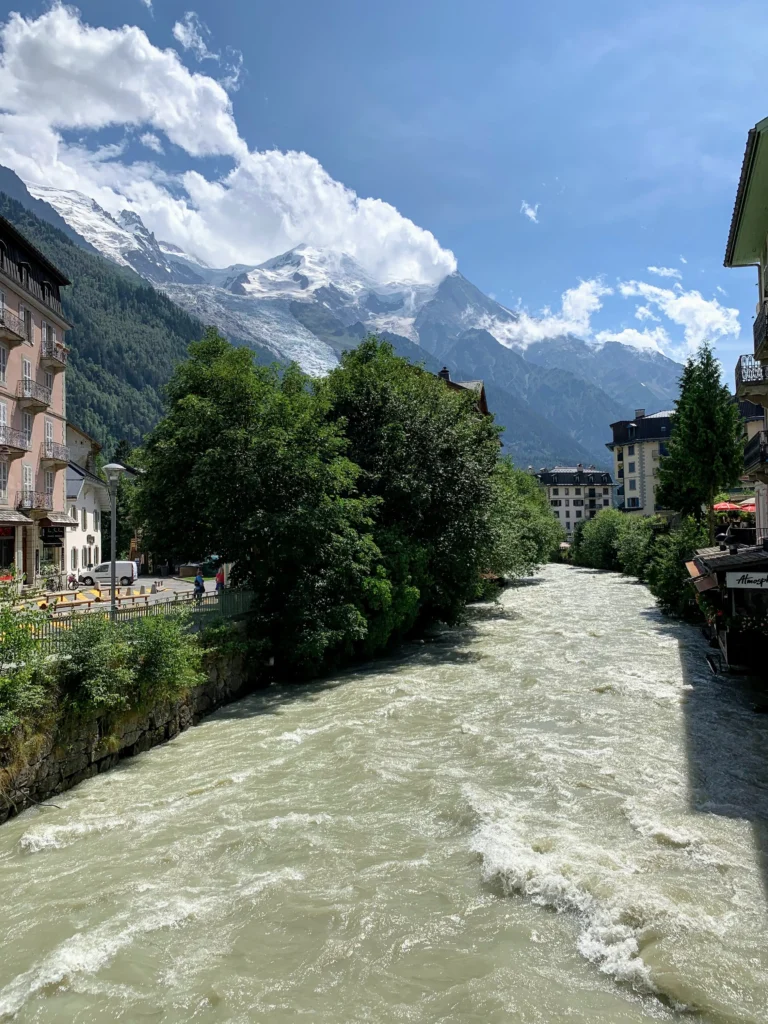
The first thing that hits you in Chamonix isn’t the cold air—it’s the scale. You step off the train or out of your transfer van in the middle of town, look up, and your neck cranes back until it hurts. Most ski resorts sit nestled in the mountains, surrounded by gentle, rolling bowls. Chamonix sits at the bottom of a deep glacial trench, with 3,000 meters of vertical granite and ice hanging almost directly over the bakeries and gear shops on Rue du Docteur Paccard.
Mont Blanc doesn’t just sit in the background here; it dominates every conversation, dictates the weather, and pulls in a strange, magnetic mix of ultra-runners, dirtbag climbers, Parisian weekenders, and wide-eyed first-timers. Whether you show up with fat skis in January or dusty trail shoes in July, this valley gets under your skin fast.
Winter in the Valley: Steep Lines, Flat Light, and Melted Cheese
Forget the manicured, ski-in/ski-out mega-resorts where every run funnels back to the same pastel hotel. Chamonix makes you work for it—and rewards you tenfold. Instead of one interconnected ski circus, the valley is split into several distinct areas connected by bus and train, each with its own personality.
When the sun is out, you head to Brévent-Flégère. Because these slopes face south, you spend the entire day carving in the sun while staring straight into the jagged teeth of the Mont Blanc massif across the valley. When a snowstorm rolls in and turns the high alpine into a whiteout, the locals disappear into Les Houches at the bottom of the valley, ducking through pine forests where the trees give you the contrast you need to see the snow beneath your feet.
And then there is Les Grands Montets above the village of Argentière. If you came to Chamonix to test your legs, this is where you go. It is steep, north-facing, holds powder days after a storm, and serves as a playground for freeriders who treat cliffs like speed bumps.
If you only do one thing on skis in your life, hire a mountain guide and ski the Vallée Blanche. Starting from the top of the Aiguille du Midi at 3,842 meters, you rope up and shuffle down a knife-edge snow arête before dropping into a 20-kilometer glacial run surrounded by towering blue seracs and crevasses. There are no piste markers, no snowplows, and no easy way out—just two thousand vertical meters of untouched high-alpine silence ending with a cold beer on a sunny terrace at Montenvers.
Not a Skier? You Won’t Care.
Half the people in town during winter never clip into bindings. The valley floor is laced with quiet cross-country ski tracks running alongside the milky-blue Arve River, where you can glide through frosted larch trees without the adrenaline of a black run. You can strap on snowshoes and hike through the quiet hamlets of Le Tour or Lavancher, or test your forearms ice climbing frozen waterfalls with a guide in the Barberine gorge.
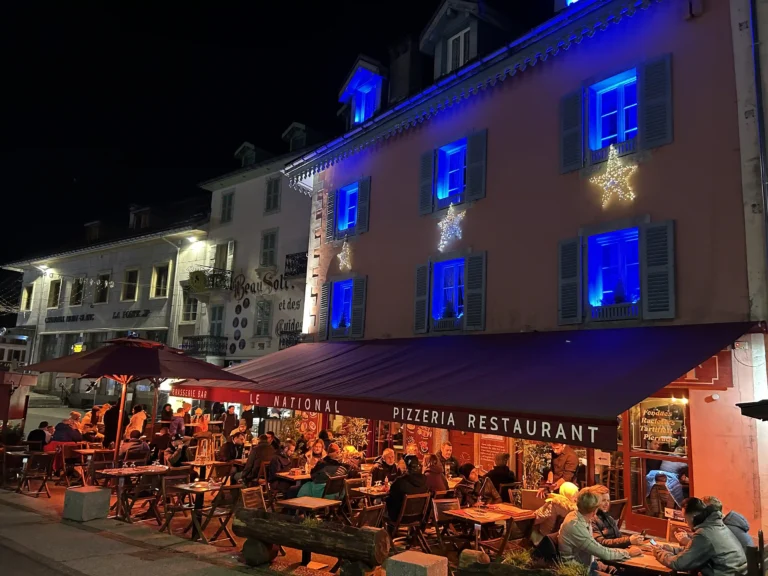
By 4:00 PM, the mountain boots start clattering down the cobblestones. Après-ski here ranges from wild live music and table-dancing at Chambre Neuf near the train station to nursing a pint of locally brewed pale ale at Big Mountain Brewing while swapping stories about which couloir was wind-blown. For dinner, skip the diet: order a bubbling cast-iron skillet of tartiflette (potatoes, bacon, onions, and an irresponsible amount of melted Reblochon cheese) or dip bread into a fondue savoyarde at La Calèche.
Summer: When the Skis Go Away and the Trails Wake Up
There is a persistent rumour that Chamonix is “quiet” in the summer. Anyone who tells you that hasn’t been in town during July or late August, when the UTMB (Ultra-Trail du Mont-Blanc) turns the streets into a roaring festival of cowbells and lycra. If you want true peace, lower hotel rates, and wildflowers without the crowds, aim for mid-June or September—when the lifts are spinning, the trails are snow-free, and you don’t have to elbow your way into a café.
Summer shifts the energy from downhill gravity to upward grit. You don’t need to be an mountaineer to experience the high trails:
- The Grand Balcon Nord & Sud: Two mid-mountain trails running along either side of the valley. Take the téléphérique up to Plan de l’Aiguille and walk across to Montenvers; your neck will ache from staring across at the Aiguilles Rouges the entire way.
- Lac Blanc: Yes, it’s on every Instagram feed, and yes, it gets busy by noon. Beat the crowds by catching the first lift up Flégère at 8:00 AM. Watching the granite spires of the Chamonix needles reflect in the turquoise water before the wind picks up is worth the early alarm.
- Paragliding from Planpraz: On any warm afternoon, the sky above town fills with dozens of colourful canopies. Running off the grass slope at 2,000 meters with a tandem pilot and floating silently over the rooftops of Chamonix before landing in the field near the Bois du Bouchet is surprisingly calm—more like sitting in an armchair in the sky than jumping out of a plane.
- Rock Climbing and Via Ferrata: From family-friendly granite slabs at Les Gaillands (right next to a small lake with a café) to multi-pitch alpine granite high in the massif, you’ll see ropes hanging off almost every rock face in the valley.
Three Experiences Worth Every Euro (Even If They Sound Touristy)
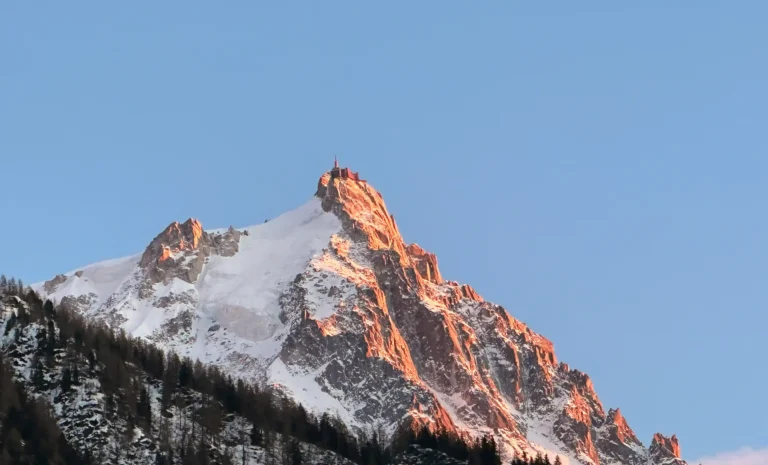
- Aiguille du Midi (3,842m): A common mistake is thinking this cable car takes you to the summit of Mont Blanc—it doesn’t (Mont Blanc is still another thousand vertical meters higher and requires crampons, lungs of steel, and serious training). Instead, the two-stage cable car shoots you straight up a vertical rock needle in twenty minutes. Step into the “Step into the Void” glass box with a thousand meters of empty air beneath your slippers, and bring a down jacket even if it’s 28°C down in town.
- The Montenvers Cog Railway & Mer de Glace: Board the bright red rack-and-pinion train that has been chugging up through the forest since 1908. At the top, you look out over France’s longest glacier. Walking down the steps to the ice cave is both awe-inspiring and sobering—markers on the granite walls show where the ice level sat just twenty or thirty years ago, offering a stark, unforgettable look at how fast the Alps are changing.
- QC Terme Chamonix: After three days of hammering your knees on steep descents, book an afternoon at this spa on the edge of town. Soaking in an outdoor infinity pool steaming in the cold mountain air while the Bossons glacier hangs right above you is the ultimate reset button.
What Nobody Tells You Before Your First Trip
- Don’t rent a car unless you have to: Geneva Airport is just an hour away, and shuttle vans (like Mountain Drop-offs or AlpyBus) drop you right at your door. Parking in Chamonix is expensive and frustrating, and your guest card (Carte d’Hôte) gives you free access to the valley train and help with the local buses.
- Check the webcams and winds before buying a lift pass: The high lifts (especially the Aiguille du Midi and the top of Grands Montets) shut down quickly in high winds. Never pre-buy a non-refundable ticket for a specific morning until you’ve checked the Chamonix app over your morning croissant at Aux Petits Gourmands.
- Respect the microclimate: A sunny morning in town can turn into a sleet storm at 2,500 meters in twenty minutes. Even on a July hike, pack a windproof shell, a warm layer, and more water than you think you need.
- Look up at sunset: Around dinner time, stop whatever you’re doing and look at the summit of Mont Blanc. Long after the valley floor is in shadow, the dome catches the last pink and fiery orange rays of the sun—a phenomenon the locals call alpenglow.
Chamonix isn’t a polished theme park; it’s a living, breathing mountain town where the bakeries open early for climbers heading out by headlamp and the gear shops outnumber the souvenir stalls. Once you’ve watched the clouds clear off the Aiguille du Dru with an espresso in hand, flat ground starts to feel very boring.
May also interest you: