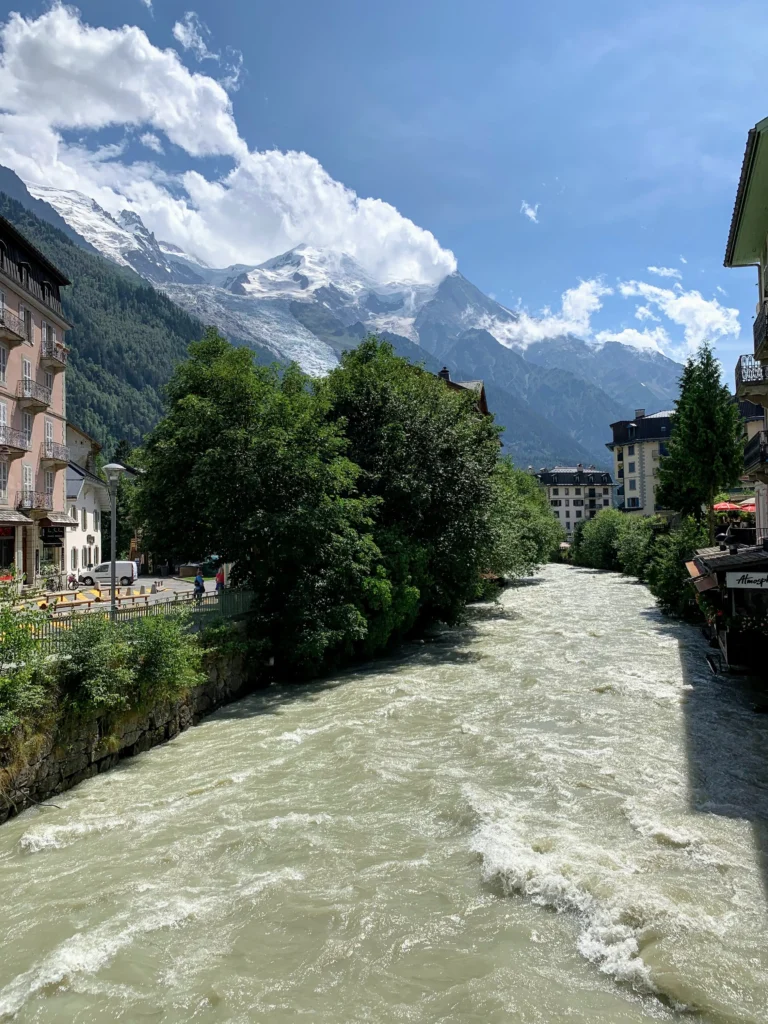
Stand on a street corner in Chamonix at 6:30 on a July morning and you will see one version of the town: quiet, cool, and smelling faintly of pine resin and fresh butter drifting out of bakery vents. The only people awake are mountaineers in heavy boots walking toward the first cable car, carabiners clinking softly against their packs, and trail runners jogging along the milky-gray rush of the Arve River.
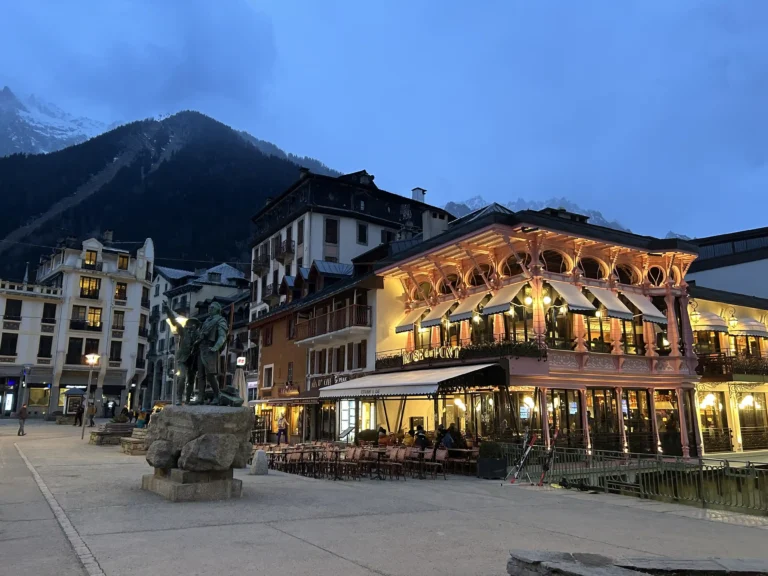
Stand on that exact same corner at 11:30 AM, and you are in a different world entirely. Tour buses have unloaded, the queue for the Aiguille du Midi stretches around the plaza, and every sunny café table on Rue du Docteur Paccard is taken.
Most visitors only ever experience the second Chamonix. They arrive late, stand in line for two hours at midday, eat overpriced cheese in thirty-degree heat, and leave wondering why everyone raves about the place.
The secret to Chamonix in summer isn’t a secret at all—it’s just geography and timing. The valley is a steep, twelve-mile glacial trough flanked by two very different mountain walls: the shady, ice-draped massif of Mont Blanc on one side, and the sunny, rocky balconies of the Aiguilles Rouges on the other. Once you understand how the sun moves across those two walls, when the afternoon clouds build, and where the side trails break away from the lift stations, you can have some of the finest alpine terrain in Europe almost entirely to yourself.
The Rhythm of the Mountains (And How to Beat the Lifts)
In the high Alps, the day starts early for a reason. By 2:00 PM in July and August, heat rising from the valley floor often builds into thick cumulus clouds that obscure the summits—and occasionally break into late-afternoon thunderstorms. If you sleep in, you pay €75 for a lift ticket to stare at the inside of a cloud.
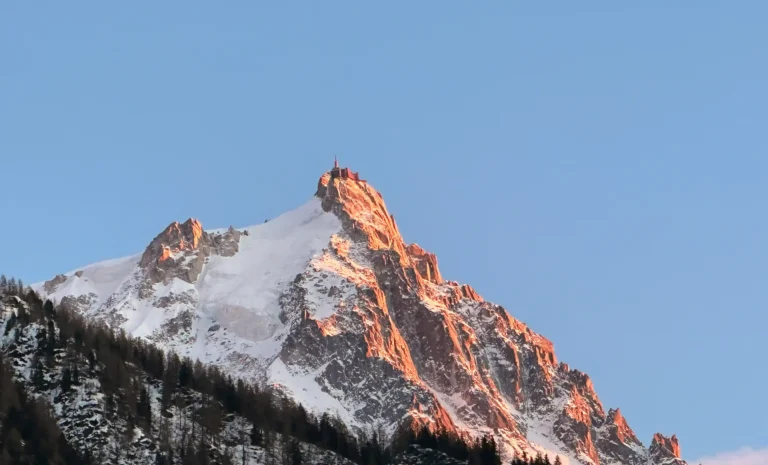
If you want to go up the Aiguille du Midi (3,842m) or take the red cogwheel train to Montenvers, book your reservation days ahead for the earliest morning slot before 8:00 AM. You will step out onto the viewing terraces in crisp, dead-calm air with the snowfields of Mont Blanc glowing pink and gold, and you’ll be heading back down to mid-mountain for a second coffee just as the crowds arrive at the bottom.
Once you have seen the famous viewpoints, leave the lift stations behind. Here is how to trade the busy paths for trails you will actually want to walk:
- Swap Lac Blanc for the Lacs des Chéserys: Everyone in Chamonix hikes to Lac Blanc. In August, the trail up from Flégère looks like a commuter line. Instead, stop just twenty minutes below it at the Lacs des Chéserys. It is a string of four quiet alpine tarns tucked into the rock shelf. Not only will you find space to sit in silence, but the angle toward theMont Blanc massif is actually better here—this is where nearly every famous postcard reflection of the mountains is photographed at sunrise.
- Walk Into the Vallon de Bérard: Drive or take the train up the valley to Le Buet and follow the trail past the Cascade de Bérard—a thundering waterfall hidden inside a narrow granite gorge that stays cool even on the hottest days. Keep walking past the trees and the gorge opens into a wide, wild alpine hanging valley where ibex regularly graze right beside the footpath.
- The Blueberry Ridges of Aiguillette des Posettes: At the far northern end of the valley above Le Tour, this broad ridge sits right on the French-Swiss border. While hikers pack onto the Grand Balcon Sud, Posettes gives you a 360-degree view of both the Chamonix valley and the Swiss peaks of the Valais, walking through chest-high rhododendrons, larch trees, and wild blueberry bushes.
- The Shaded Forest Tracks of the Nantillons and Petit Balcon: If you don’t want to touch a cable car at all, stick to the lower forest trails like the Petit Balcon Sud between Les Houches and Les Praz, or the steep paths winding up toward the Nantillons glacier moraine. You walk under high spruce canopies with glacial streams crossing the trail every half mile.
Water, Pine Shade, and the Art of the Alpine Picnic
Because Chamonix sits at 1,035 meters, people assume it stays chilly all summer. In reality, the rock walls trap heat, and a sunny July afternoon in town easily hits 28°C to 30°C.
First, a fair warning: do not jump into the Arve River or the high glacial tarns expecting a refreshing Mediterranean swim. That turquoise water was solid ice three hours ago; it sits right around 2°C to 4°C and will take the breath out of your chest in seconds.
Instead, do what locals do when the afternoon heat peaks. Hike forty minutes uphill from the edge of town to the Cascade du Dard, where a twin waterfall drops twenty meters into a shaded rock amphitheater, filling the air with cold spray. Or head twenty minutes down the walk from town to Lac des Gaillands. Here, the water is shallow enough to warm slightly in the sun, Mont Blanc reflects straight across the surface, and you can lie on the grass watching rock climbers work their way up the warm gneiss slabs right across the path. For pure shade, walk five minutes past the sports center into the Bois du Bouchet—a flat, breezy pine forest laced with clear streams where the temperature immediately drops five degrees.
This is also where you should eat lunch. Sitting at a pavement restaurant in town at 1:00 PM is a waste of a good mountain day. Instead, build a proper alpine picnic:
- Hit the Saturday Market (or a Village Fromagerie): Every Saturday morning, Place du Mont-Blanc fills with regional farmers. Skip the supermarket and buy a wedge of raw-milk Abondance or Tomme de Savoie, a dry saucisson sec (go for hazelnut or wild blueberry), and a punnet of small mountain strawberries.
- Find a Real Boulangerie: Pick up a traditional sourdough baguette with a dark, blistered crust from a bakery outside the main tourist square—like L’Al’Pain in Les Houches or Le Pain de Chibon in Les Praz.
- Use the Glacier as Your Fridge: Bring a bottle of crisp Savoyard white wine—an Apremont or a Chignin-Bergeron—and wedge it between two rocks in a mountain stream for fifteen minutes while you unpack your bag. It will come out cellar-cold.
Eating and Drinking Like You Actually Live Here
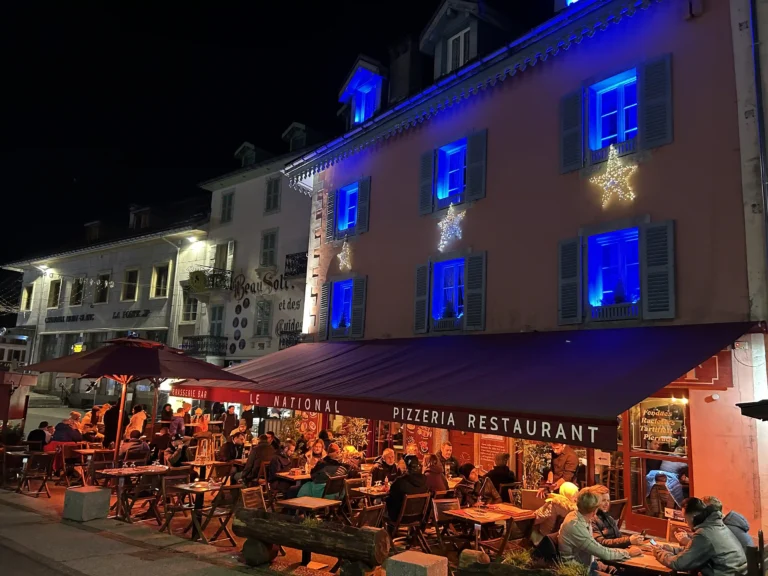
Savoyard food—fondue, raclette, and tartiflette—was invented by farmers burning four thousand calories a day in the dead of winter. Eating a pot of boiling Gruyère and Comté on a sweltering August evening on a crowded street terrace is an endurance test.
If you want the full melted-cheese experience in summer, wait for the weather to turn. Sooner or later, an evening thunderstorm will roll over the peaks, rain will wash down the slate roofs, and the valley temperature will drop by twelve degrees in an hour. That is the night you book a cozy wood-paneled corner table, order a raclette (where a half-wheel of cheese is heated under an element right at your table for you to scrape over waxy potatoes and cured ham), and drink a bottle of peppery red Mondeuse.
On sunny days, chase Chamonix’s best culinary tradition: the mountain buvette.
Scattered throughout the forests and perched on old glacial moraines are tiny, family-run wooden shacks—many only reachable on foot and operating without grid electricity. Hike up through the woods to Chalet La Floria (famous for its flower boxes trailing in front of the Drus spire) or walk through the gorge to Buvette du Chapeau or Cascade de Bérard. You sit at rough-hewn wooden picnic tables under the trees and order giant herb omelettes, cold platters of local charcuterie, homemade tarte aux myrtilles (wild blueberry tart), and cold draft beer. Just remember to carry cash in your pack; satellite card terminals don’t always play nicely with granite cliffs.
Beyond the Hiking Boots: Up in the Air and Out on the Ice
If your calves need a rest from steep trails—or if looking at the peaks from below feels too passive—the valley is wired for almost every mountain discipline imaginable.
- Tandem Paragliding (Parapente): Look up on any calm summer morning around 10:00 AM and you will see dozens of bright nylon wings spiraling lazily in the rising thermal air above Planpraz and Plan de l’Aiguille. Flying tandem here isn’t a terrifying carnival drop; you take four running steps off a grassy slope with a seasoned pilot and immediately float into complete silence. For thirty minutes, the only sound is the wind whistling through the Kevlar lines while you drift past rock spires and glaciers, before touching down on your feet on the grassy Savoy meadow right in town.
- Walking on a Glacier (Without Climbing Mont Blanc): You do not need to spend months training for the summit of Mont Blanc to experience true high-altitude mountaineering. Hire a guide through the Compagnie des Guides de Chamonix (the oldest mountain guide association in the world, operating since 1821) for a day traverse across the Vallée Blanche. You clip crampons onto your boots, rope up at 3,800 meters, and walk across a vast white amphitheater of crevasses and granite towers where it feels like winter in the middle of July. For a first real summit, ask a guide about the Aiguille du Tour—a straightforward, wildly scenic scramble over snow and warm granite.
- Singletrack and Lift-Served Mountain Biking: While the central Chamonix lifts limit bikes in high summer to protect hikers, the ends of the valley are built for two wheels. Head up to Le Tour (Balme) for fast, rolling singletrack through open alpine pastures with views all the way into Switzerland, or down to Les Houches (Prarion) for rooted, technical forest tracks. For a gentler afternoon, rent a gravel bike or e-MTB and follow the shaded riverside trails linking the villages from Servoz all the way up to Argentière.
- Sunrise Hot Air Ballooning (Outside the Gorge): You won’t see hot air balloons launching from the floor of Chamonix itself—the valley walls are simply too narrow and the wind currents too tricky. Instead, drive thirty minutes down the highway to Praz-sur-Arly or Megève before dawn. Because those foothills sit further back in a wide basin, lifting off at sunrise brings you straight up to eye level with the entire Mont Blanc massif, watching the first light hit the ice from a completely still basket.
- Helicopter Skydiving: For those who want sheer speed rather than quiet floating, tandem skydives operate out of nearby alpine airfields—lifting you up by helicopter above the snowline before dropping you into freefall right alongside the north faces of the Alps.
Choosing Your Basecamp: A Cheat Sheet to the Villages
When booking a trip, most people type “Chamonix” into a search bar and book a hotel within five hundred meters of the train station. Unless you plan on closing down the craft beer bars every night, you will sleep much better—and get far better value—by picking one of the smaller villages strung along the valley floor.
- Les Praz & Les Bois (The Local Sweet Spot): Located just thirty minutes on foot (or five minutes by bus) north of the center, this is arguably the finest place to stay in the valley. Wooden chalets sit in quiet meadows directly beneath the needle-sharp granite of the Aiguille du Dru. You have the Flégère cable car right there, forest trails starting at your back door, a handful of excellent bistros, and zero midnight street noise.
- Argentière (High, Cool, and Unpretentious): Sitting higher up the valley at 1,250 meters right at the foot of the massive Argentière glacier, this village has a grittier, serious mountain feel. It stays cooler in August, has a great Sunday morning market, and is the best jump-off point for high trails toward Le Tour and Switzerland.
- Les Houches & Servoz (Wide Views and Hidden Cabins): At the lower, wider end of the valley, the sun lingers much later into the evening than it does in Chamonix town. Because there is more forested pastureland here, this is where you’ll find unique places to sleep—from private A-frame cabins and treehouses tucked into the woods to eco-lodges and yurts where you wake up to cowbells rather than delivery trucks.
- Les Bossons (For Pitching a Tent Under the Ice): If you love camping, skip the budget hostels in town and pitch a tent at one of the quiet family campsites in Les Bossons or Les Bois (such as Camping des Deux Glaciers or Camping de la Mer de Glace). For around €20 a night, you can unzip your tent flap in the morning with a mug of coffee and stare straight up at the fractured blue ice of the Bossons glacier hanging three thousand meters above your head.
The Insider Logistics: Money, Trains, and Packing Smart
Does Chamonix have to break the bank? It can if you let it—buying individual return tickets on the major cable cars every day for a couple will quickly burn through €150 a day before you’ve even bought lunch. To keep costs sensible, mix your days. If you plan to ride both the Aiguille du Midi and the Montenvers train (plus a hiking lift like Brévent or Flégère), buy a multi-day Mont Blanc Multipass online at least three days before you arrive; the early-bird web rates cut the price substantially. Then, alternate your lift days with free days walking from the valley floor, swimming at Les Gaillands, or hiking the mid-mountain Balcon trails.
The Carte d’Hôte Trick (Why You Should Park the Car and Leave It) Driving between villages in July and August is an exercise in frustration—car parks at the trailheads fill up by 8:30 AM. Whenever you check into any hotel, apartment, or campsite in the valley, immediately ask your host for your Carte d’Hôte (guest pass). It is included in your tourist tax and gives you completely free travel on the scenic red Mont Blanc Express train along the entire valley between Servoz and Vallorcine, plus cheap access to the local bus network. You can hike point-to-point from one village to another high in the mountains and simply hop on the train at the bottom to get back to your door.
When to Actually Go July and August bring long days, warm evenings, and an electric buzz across town—especially during the last week of August when ten thousand trail runners arrive for the UTMB (Ultra-Trail du Mont-Blanc). If you want the trails to yourself, aim for the first three weeks of September. The school holidays are over, accommodation prices drop, the main cable cars are still spinning, the afternoon thunderstorms become rare, and the high blueberry bushes turn deep crimson against the first dusting of autumn snow on the peaks.
The 20-Degree Packing Rule Never trust the weather on your hotel balcony. It can be 28°C in shorts and a t-shirt in Chamonix town while simultaneously sitting at -4°C with a biting wind on the Aiguille du Midi viewing platform ten minutes later. Even on a bluebird summer day, pack a daypack with:
- Broken-in trail running shoes or hiking boots with proper lugged soles (smooth city sneakers are miserable on loose alpine scree).
- A lightweight, packable down jacket or warm fleece and a windproof/waterproof shell.
- Category 3 or 4 sunglasses and high-SPF sunscreen—glacier glare and high-altitude UV will burn you in twenty minutes.
- A liter of water (which you can refill at the cold Eau Potable stone troughs in every village and refuge) and fifty euros in cash for mountain buvettes.
Related reading: