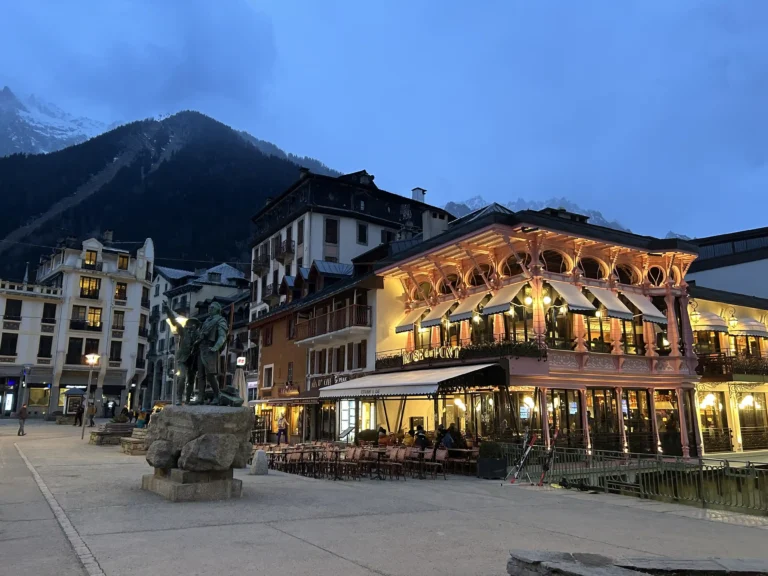
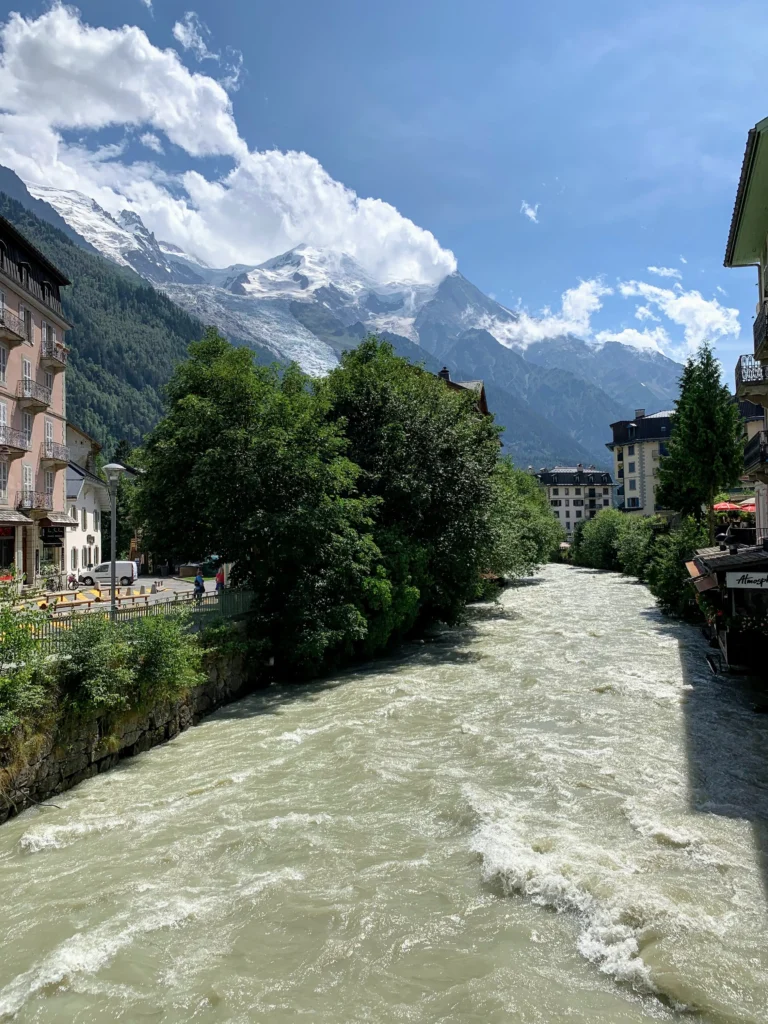
If you pack your bags for Chamonix in July expecting to step out of your hotel into a snowbank, you are going to be disappointed. Down on the valley floor, at 1,035 meters, summer feels unmistakably like summer. Days are generally warm and bright, with afternoon temperatures sitting comfortably between 18°C and 26°C (64°F to 79°F)—warm enough for t-shirts, cold beers on sunny terraces, and dusty trail-running shoes.
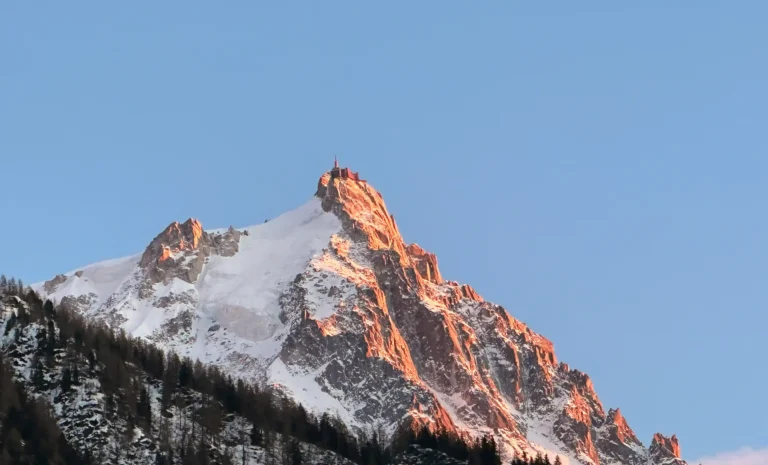
Yet all you have to do is tilt your head back. Almost three vertical kilometers above the town streets, the upper flanks of Mont Blanc and its neighboring granite spires remain locked in ice year-round. In Chamonix, whether you find snow in the summer comes down to one simple question: how high are you willing to go?
Where to Find Snow When the Valley is Green
Most of Chamonix’s cable cars and chairlifts run throughout the summer months, though the winter ski racks are swapped out for mountain bike hooks. In July and August, these lifts carry hikers, rock climbers, trail runners, and paragliders rather than skiers.
If you want to stand on snow without hiking for hours, the Aiguille du Midi cable car is the easiest route. In twenty minutes, it hauls you from the pine forests of the valley floor straight up to 3,842 meters. Up there, winter never really leaves. Even during an August heatwave, temperatures hover near freezing, the viewing platforms overlook the vast white expanse of the Vallée Blanche, and you can watch roped teams of alpinists stepping out onto the narrow snow arête in crampons.
Lower down, around the mid-mountain stations, the picture changes week by week. If the Alps have come off a heavy winter and a cool spring, stubborn snowfields will cling to north-facing bowls and shaded passes around 2,300 to 2,500 meters well into July. Early-season hikers heading up to Lac Blanc (2,352m) or crossing high passes on the Tour du Mont Blanc frequently find themselves kicking steps through slushy old snowdrifts while alpine wildflowers bloom just a few meters away on the sun-warmed rock.
How the Chamonix Snow Line Moves Through the Year
Mountain weather rarely follows a neat calendar. The first autumn dustings usually coat the high peaks in September or October, creeping down toward the tree line by November. While the lower ski resorts start building their base in December, the high-altitude snowpack actually reaches its deepest point much later—typically in late March or April, when heavy, moisture-rich spring storms dump meters of snow above 2,500 meters.
From May onward, the sun gains real strength and the melt accelerates. The snow line retreats uphill by tens of meters every week. By late June, the main ski runs are bare grass and loose rock, the winter pistes are long closed, and only the permanent glaciers and shaded north-facing gullies hold onto their white cover. Every once in a while, a sharp summer cold front sweeps through in July or August, dusting the peaks with fresh white powder down to 2,200 meters overnight—only for it to vanish under the sun by lunchtime the next day.
The Lost Era of Chamonix Summer Skiing
While you can no longer clip into skis for a casual summer resort day in Chamonix, older locals still remember when you could. From the 1960s through the early 1990s, the valley hosted some of the best-known summer glacier skiing in the Alps.
Up at the Grands Montets, where the upper ridges sit above 3,200 meters, snow held up well enough that a long drag lift on the glacier side ran right through the warmer months, drawing national ski teams and die-hard enthusiasts. Across the massif, high on the Vallée Blanche near Pointe Helbronner on the Italian border, an even larger summer ski area operated during the 1960s and 1970s. Run by an Italian company on the Giant’s Glacier (Glacier du Géant), it featured at least three surface lifts strung directly across the high snowfields.
That era came to a quiet end by the early 1990s. Running mechanical ski lifts on living, shifting high-altitude ice is a losing battle. Between the brutal weather above 3,000 meters, shrinking glaciers, and the constant hazard of crevasses opening up beneath the lift tracks, keeping those summer runs safe became impossible. Today, the old lift pylons are long gone, leaving the summer snowfields to the mountaineers.
Related reading: