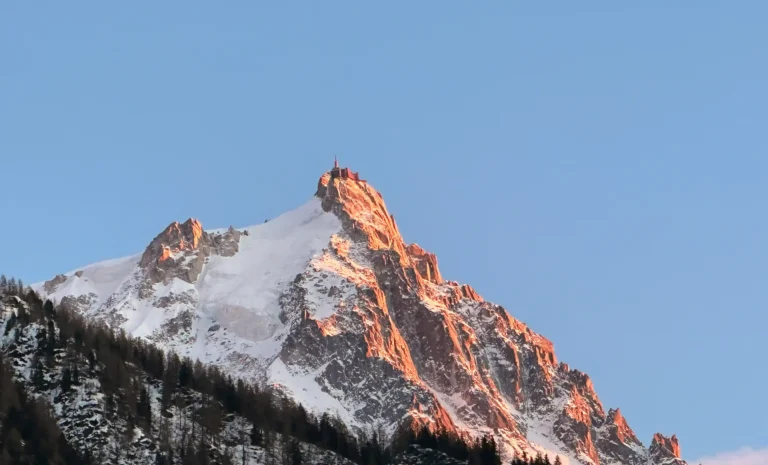
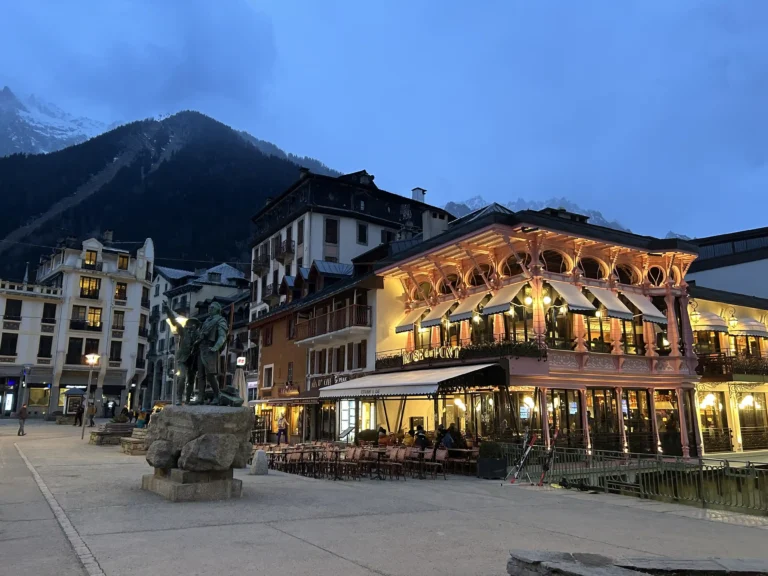
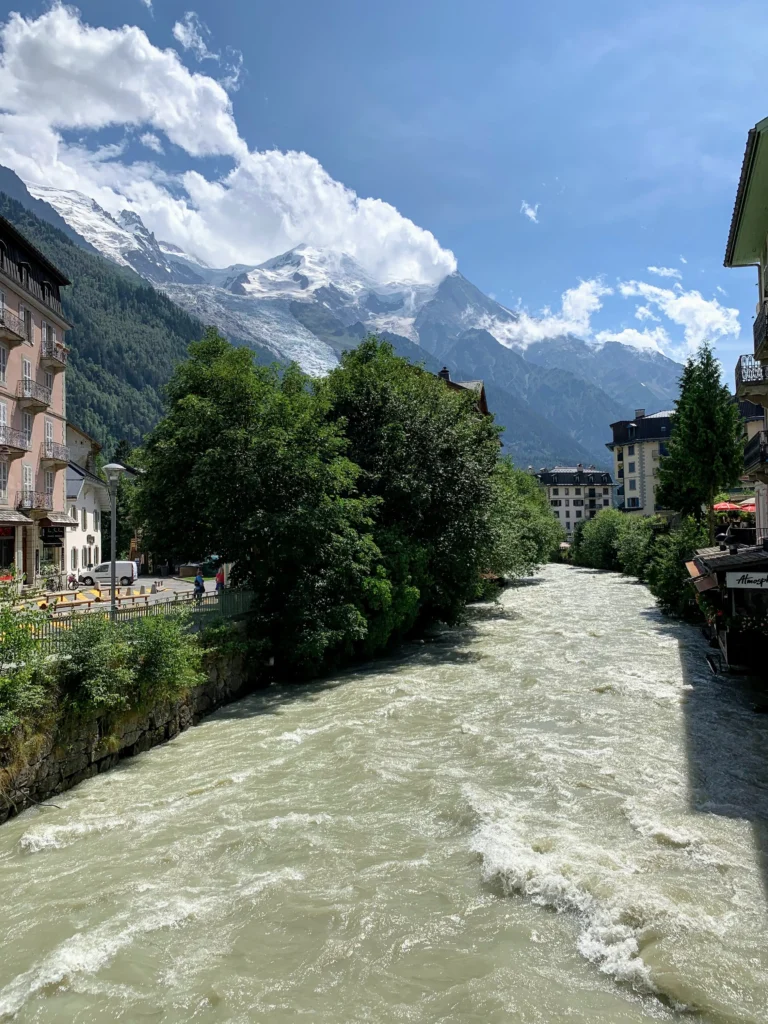
Look at a satellite map of the Alps and Courmayeur and Chamonix look practically close enough to shout across. Separated by just a few miles of granite and glacier, both towns wrap themselves in the “Mont Blanc” brand. If you’re used to mega-resorts like Les 3 Vallées or the Portes du Soleil, it’s completely natural to assume you can click into your bindings in Italy, cruise over the shoulder of Western Europe’s highest peak, and unclip for a late lunch in France.
You can’t—at least not on a groomed run.
Despite all the “Mont Blanc” branding, neither the French nor the Italian ski areas actually have groomed pistes on the true face of Mont Blanc itself. There is no chairlift linking the two resorts, and you definitely can’t follow a blue trail across the border.
That doesn’t mean you can’t ski between Italy and France in a single trip—or even a single day. It just means you need to know the difference between high-alpine mountaineering, tunnel logistics, and a sneaky neighbouring resort 20 minutes down the road that most first-timers overlook.
Two Sides of the Same Mountain, Two Totally Different Ski Cultures
Before figuring out how to cross the border, it helps to understand how differently these two valleys are set up.
On the French side, Chamonix isn’t one connected ski resort; it’s a collection of four distinct, non-linked sectors strung along the valley floor:
- Grands Montets (Argentière): Steep, north-facing, and legendary for serious freeriding.
- Brévent–Flégère: Directly above Chamonix town, facing south with postcard views of the Mont Blanc massif.
- Balme (Le Tour / Vallorcine): Wide, rolling bowls down near the Swiss border (watch out for the wind here).
- Les Houches: Tree-lined cruisers down the valley that save the day when a storm shuts down the upper mountain.
Cross through the mountain into Italy, and Courmayeur feels like another world. Locals call it the sunny side of Mont Blanc for good reason. While Chamonix can feel raw, shadowy, and intense in mid-winter, Courmayeur is compact, sun-drenched, and unapologetically Italian—meaning two-hour pasta lunches on the mountain are taken just as seriously as the terrain. And don’t let the relaxed vibe fool you: when a storm rolls in from the south, Courmayeur’s off-piste tree runs and high bowls rival anything on the French side.
Is the Mont Blanc Unlimited Pass Worth It?
When you go to buy lift tickets, you’ll be pushed toward the Mont Blanc Unlimited (MBU) pass. It covers all the Chamonix sectors, Courmayeur, Megève (Evasion Mont-Blanc), and even offers perks in Verbier.
Here is the honest math: if you are only staying for a long weekend, stick to a local area pass. You’ll spend too much time commuting through the tunnel to justify the upcharge. But if you’re staying for five days or more, the MBU pass is a game-changer—especially because it covers the expensive Skyway Monte Bianco and Aiguille du Midi cable cars, plus the cross-border ski bus between Chamonix and Courmayeur.
How to Actually Ski Between Courmayeur and Chamonix (The Vallée Blanche)
While there are no groomed trails connecting the two towns, you can ski from one country to the other. The catch? It’s 20 kilometers of unmanaged, crevasse-riddled glacial terrain known as the Vallée Blanche.
Most people ski the Vallée Blanche entirely within France, taking the Aiguille du Midi cable car up from central Chamonix (3,842m) and skiing back down to town. However, you can also start the descent from the Italian side:
- Drive or bus to La Palud: Just outside Courmayeur sits the Skyway Monte Bianco—a rotating glass cable car that rockets you up to Punta Helbronner (3,466m) right on the French-Italian border. Note that this lift is not connected to Courmayeur’s main ski slopes; you have to get there from the valley floor.
- Step onto the glacier into France: From Punta Helbronner, you clip in on the border, traverse past the Col Flambeau, and drop into the French side to join the classic Vallée Blanche route all the way down to Chamonix.
- Why you can’t easily ski the reverse route: Going from Chamonix to Courmayeur on skis is a serious backcountry mission. The tiny red panoramic gondola you see connecting Aiguille du Midi to Punta Helbronner in photos? It only runs in the summer. In winter, getting from the French drop-off over to the Italian side (to ski the famous Toula Glacier back toward La Palud) requires slapping climbing skins onto your skis and hiking uphill across high-altitude glaciated terrain.
A non-negotiable rule: Unless you are experienced in glacial travel and rope rescue, do not attempt this without a certified IFMGA mountain guide. You’ll be wearing a harness, carrying an avalanche transceiver, and stepping over active crevasses. If you book through Guides de Courmayeur, they not only keep you out of hidden holes in the ice, they also sort out the return bus ticket through the tunnel so you aren’t stranded in France in your ski boots.
If you decide to drive yourself between the two resorts instead, brace yourself for the Mont Blanc Tunnel toll. It is eye-wateringly expensive—upwards of €50 for a single one-way crossing, or around €65–€70 for a round-trip ticket (valid for 7 days).
The Courmayeur Base-Station Trap: Don’t End Up in the Wrong Village
If you’re booking a hotel in Courmayeur, Google Maps is going to lie to you by omission.
Courmayeur’s actual ski area starts mid-mountain at a hub called Plan Chécrouit (1,700m). You get up there via two main lifts from the valley floor:
- The Courmayeur cable car, which leaves from the edge of Courmayeur town center.
- The Dolonne gondola, which leaves from the neighbouring village of Dolonne across the river.
On the trail map, you’ll see a home-run piste heading all the way down to the bottom of the valley. Do not take this run at the end of the day if you are staying in central Courmayeur. That trail drops you straight into Dolonne, not Courmayeur town. There is no ski-out piste into the main town center. If you ski down to Dolonne at 4:30 PM when the lifts close, you’re looking at a long, miserable clomp in ski boots back across the bridge and uphill into town.
If your hotel is in Courmayeur proper, ride the main Courmayeur cable car down from Plan Chécrouit at the end of the day—or keep an eye on the clock so you can catch the Dolonne gondola back up to Plan Chécrouit and download from there.
The Secret Alternative: Want to Ski From Italy to France on Groomed Runs?
If your bucket-list goal is simply to ski across an international border for a French tartiflette at lunch and an Italian bombardino by 3:00 PM—without ropes, harnesses, or guides—skip the Mont Blanc massif for a day and drive 20 minutes south of Courmayeur to La Thuile.
La Thuile shares a massive, lift-linked ski area (Espace San Bernardo) with the French resort of La Rosière. Here, you can effortlessly ski back and forth across the French-Italian border on groomed pistes all afternoon.
A few survival tips before you go:
- Wait for a bluebird day: The border crossing sits high on the exposed Col du Petit Saint-Bernard. In flat light or high winds, visibility drops to zero and the cross-border lifts are the first to close—which means an expensive taxi ride back around the mountain if you get stuck on the French side.
- Snowboarders, bring your patience: Connecting from Italy into France (and back) involves several long, flat cat-tracks and a pair of notorious, steep Poma (button) drag lifts on the French return side. If you’re on a snowboard, keep your speed high on the traverses, and don’t be surprised if those drag lifts test your sanity.
Related reading: